Ice Retention / Guide
How to pack a cooler: the layer order, the ratio, and the one thing you should not drain
Two coolers of the same model, packed differently, are two different coolers. The order you load it in decides how long it holds, and the makers publish the ice ratio they measured their own numbers at.
By Mike M.Updated Researched · every figure sourced
#adReader-supported: we may earn a commission if you buy through our links, at no extra cost to you. It never decides a ranking. How we rank · Disclosure
Before you pack anything
Two steps happen before the first item goes in, and skipping either costs you more ice than any packing order can win back.
Chill the cooler. A 45-quart rotomolded cooler is roughly 30 lb of plastic and foam sitting at room temperature, and your first several pounds of ice go into cooling that, not your food. How to pre-chill a cooler is the method and the timings.
Chill the contents. A cooler is an insulator, not a refrigerator — it has no way to remove heat from a warm six-pack except by melting your ice. Everything that goes in should come out of a fridge or a freezer. Room temperature cans are the single most common reason a cooler that measured four days in a lab lasts a day and a half on a trip.
The ratio the makers publish
Use that to set expectations before you shop as well as before you pack: a “60-can” cooler is a 28-can cooler once there is ice in it. What size cooler do I need does this sum for every size class, and how many ice packs do I need does it for reusable packs instead of bagged ice.
The layer order
Cold falls. That is the whole principle — chilled air is denser than warm air, so cold mass low in the cooler keeps working on everything above it, and cold mass on top does far less. Load in this order.
1. Cold mass on the floor. Block ice, frozen jugs or hard packs, laid flat across the bottom. This is the layer doing the long work, and it is the reason block ice earns its place — a block has less surface area per pound than cubes, so it melts more slowly. Block ice vs cubed ice is the honest version of that trade.
2. Frozen food next. Frozen meat is extra cold mass you were carrying anyway. Vacuum-sealed or double-bagged, directly on the ice layer.
3. Fridge-cold food above it. Anything that must stay below 40°F but must not freeze. Hard containers, not bags — packaging that holds its shape also holds its contents out of the meltwater.
4. Cubed ice into every void. This is the step people skip. Air is the enemy; pour loose ice into the gaps between packages until nothing shifts when you tilt the cooler. A cooler packed to the brim holds ice dramatically longer than the same cooler half full.
5. Drinks and anything you reach for, last and on top. If it is in the top layer you can get it out without excavating, which means the lid is open for five seconds instead of thirty.
6. A towel or a dry bag across the top. The headspace above the contents is the warmest air in the cooler; filling it with something dry and insulating is free.
One structural caveat: this layering only works if the cooler's interior is deep enough for layers. Published interior heights vary more than quart ratings suggest — the YETI Tundra 65 is 11.1 inches tall inside and the Tundra 45 is 10.6, while the Engel 50 and the YETI Roadie 24 are both over 13 inches and will stand bottles upright. Check the number before you plan the stack.
Why drinks belong in a second cooler
Every time the lid opens, the cold air falls out and warm air replaces it. On a normal day the drinks cooler is opened twenty or thirty times and the food cooler needs to be opened three. Putting both in one box means the food is paying for every beer.
So the cheapest upgrade to a cooler system is a second, smaller cooler for drinks — ideally one you do not care about, kept in the shade, re-iced freely. Best small coolers and best soft coolers cover that job, and best coolers for camping sorts coolers by how many nights you are out.
Do not drain the meltwater
Cold water is cold mass. Ice water sitting at 32°F is doing useful work, and the air that replaces it when you pull the plug is not. Drain it when you need the volume back for food, when it is getting into packaging, or when the cooler has had raw meat in it — not on a schedule.
The exception is any cooler carrying game or fish, where the water goes bad and the smell stays. That is a drain-often case, and a cooler with a plug that drains partially open — RTIC describes exactly that, over a channelled and recessed floor — is worth paying for. See best coolers for hunting and how to clean a cooler.
Our picks for this
What to pack it with
A block for the floor, hard packs for the walls, and a cooler with the interior length to actually layer in. Prices come from the live Amazon listing.
Best ice pack overall
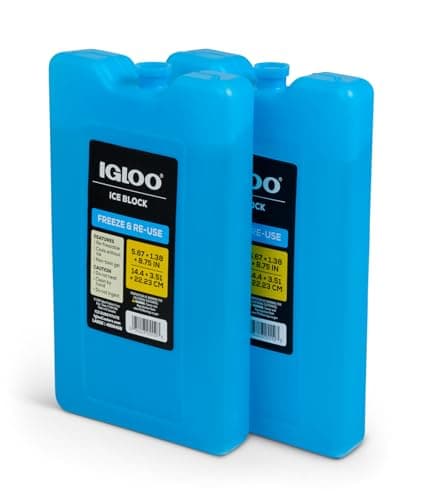
Igloo MaxCold Ice Block (Large, 2-pack)
90-day warranty8.0/10The bottom layer: Outdoor Life's Best Overall pack, measured at 5°F out of the freezer and 31°F after four hours on a counter. Lay the blocks flat across the floor.
$14.99Amazon#ad · Price as of October 10, 2026 · Disclosure for the link to Igloo MaxCold Ice Block (Large, 2-pack)
Coldest ice pack (Outdoor Life)
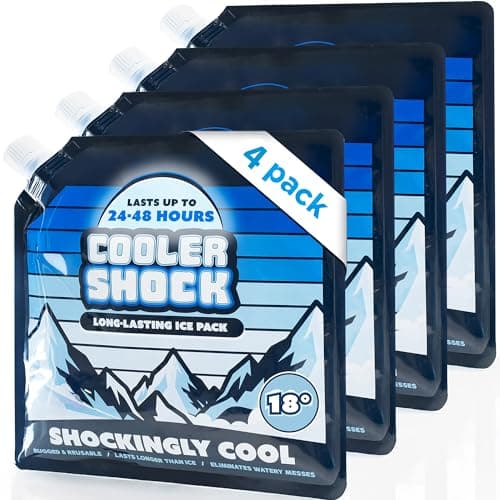
Cooler Shock Mid-Size Reusable Ice Packs (4-pack)
Warranty: unverified7.7/10The wall layer: an 18°F phase change and a claimed 5-6 lb of ice replaced per pack, so a few of these around the contents take the place of a bag of cubes.
$29.99Amazon#ad · Price as of October 10, 2026 · Disclosure for the link to Cooler Shock Mid-Size Reusable Ice Packs (4-pack)
Best big cooler for the money
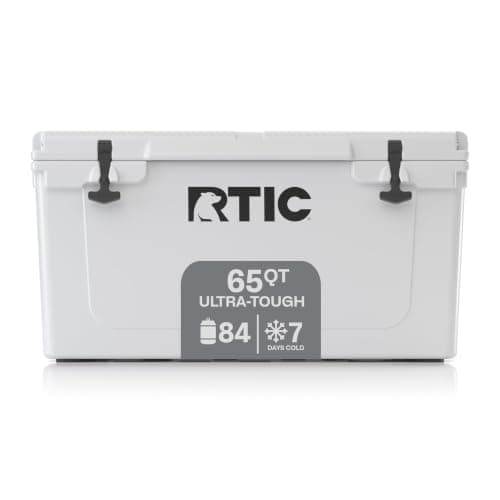
RTIC 65 QT Ultra-Tough Cooler
5-yr warranty7.9/10The cooler that layers properly: a published 26-inch interior length, 58 lb of ice capacity, 5.5 measured days below 40°F and a drain plug designed to drain partially open.
$269.00Amazon#ad · Price as of October 10, 2026 · Disclosure for the link to RTIC 65 QT Ultra-Tough Cooler
How we scored this
What we checked before picking
Every pick on this page is built from documents you can open yourself: the maker's published capacity, insulation, dimensions and weight; the warranty term quoted from the maker's own warranty page with the date we read it; the parts catalogue, to confirm the latches, gaskets, plugs, lids and straws can actually be bought; and the third-party ice-retention tests that measured these models (OutdoorGearLab, Outdoor Life, Treeline, Outside, Gear Patrol), credited to the publisher that ran them. Every figure links to where it came from, so you can check the pick before you buy it.
Scores are editorial judgments built from that documented research. Commissions never set a score or decide a pick. The rubric and its weights are published.
Corrections & updates
- First published. The 2:1 ratio and every interior dimension are quoted from the makers' own specs; the ice-pack temperatures are Outdoor Life's four-hour counter test.
Questions
Frequently asked
How do you pack a cooler so ice lasts longer?
Pre-chill the cooler, load only cold contents, put block ice or hard packs on the floor, frozen food on top of that, fridge-cold food above, cubed ice into every void, and drinks last. Fill it to the brim, keep it in the shade and leave the meltwater in.
Should ice go on the top or the bottom of a cooler?
Your long-lasting cold mass — block ice, frozen jugs, hard packs — goes on the bottom, because chilled air is denser and sinks through everything above it. Loose cubed ice then goes into the gaps at every level to remove air.
What is the ice-to-food ratio for a cooler?
Roughly two parts ice to one part contents by volume, which is the basis the makers quote their own capacities at: YETI rates the Tundra 45 at 28 cans at a 2:1 ice-to-can ratio, against 60 cans with no ice for a comparable 45-quart RTIC.
Should I drain the water out of my cooler?
Not on a schedule — 32°F meltwater is cold mass and the air that replaces it is not. Drain when you need the space, when water is getting into packaging, or when the cooler has carried raw meat or fish.
Do you need two coolers?
It is the cheapest real upgrade there is. A drinks cooler gets opened twenty or thirty times a day and a food cooler needs to be opened three; sharing one box means the food pays for every drink.
How full should a cooler be?
Completely. Air warms and ice does not, so every void you fill with ice or contents buys you time. A half-full cooler is mostly a box of warm air no matter what you paid for it.
Keep reading
Related on Chill & Chest
Receipts
Sources
- L.L.Bean (authorized YETI dealer) — YETI Tundra 45 product page (read 2026-09-21)
- L.L.Bean (authorized YETI dealer) — YETI Tundra 65 product page (read 2026-09-21)
- RTIC — 45 QT Ultra-Tough Cooler product page (read 2026-09-21)
- RTIC — 65 QT Ultra-Tough Cooler product page (read 2026-09-21)
- RTIC — Ultra-Tough Cooler Drain Plugs (read 2026-09-21)
- Engel — Engel 50 High Performance Hard Cooler (ENG50) product page (read 2026-09-21)
- L.L.Bean (authorized YETI dealer) — YETI Roadie 24 product page (read 2026-09-21)
- Igloo — MaxCold Ice Large Freeze Block product page (read 2026-09-21)
- Amazon — Cooler Shock 4-Pack Mid-Size Reusable Ice Packs listing, model Shock-1/18F-Dry: "An 18°F phase change point keeps contents colder longer than standard ice, maintaining safe temps for up to 48 hours in a size-matched cooler", "Replaces 5-6 lbs of Ice Per Pack", 10 × 10 × 1 in each, add water and freeze (read 2026-10-03)
- Outdoor Life — "Best Ice Packs for Coolers", June 12, 2025, 36-hour freeze test (read 2026-09-21)
- Chilly Moose — "Ice Packs vs Loose Ice vs Block Ice: What Keeps a Cooler Cold Longest": "a single large block has far less exposed surface area per unit of mass than the same weight of cubes"; "Cubes have lots of surface area, so they pull heat out of warm drinks and food quickly and pack tightly into every gap"; block ice for "Multi-day trips, the long-haul base layer", cubes for "Day trips, fast chilling, filling gaps" (read 2026-10-09)
- Elite Cooler (Pelican cooler dealer) — "Cooler Use 101: Get the Best Ice Retention from Your Cooler": "You should always use twice as much ice as you have goods in your cooler", pre-chill with "10-20 pounds of ice cubes" for "12-24 hours", then "layer the bottom with block ice, and pack your cooler, being sure to add layers of cubed ice and fill in any open spaces with more cubed ice" (read 2026-10-09)
- OutdoorGearLab — "The Best Coolers of 2026", updated July 17, 2026, comparison table (read 2026-09-21)
Specs come from the maker's own product pages (linked on every product), warranty terms from the maker's warranty page with the date we read it, and ice-retention measurements are attributed to whoever measured them. Prices are the live Amazon price with the date they were last checked. Where a figure isn't published anywhere, the page says so. Read the full method.