Drinkware / Guide
Do insulated tumblers sweat? A vacuum cup should not, and a wet one is a diagnosis
Condensation on the outside of a steel tumbler is not cosmetic. It means the outer wall is cold, and on a working vacuum cup the outer wall is supposed to be at room temperature. Here is how to tell which of three things is happening.
By Mike M.Updated Researched · every figure sourced
#adReader-supported: we may earn a commission if you buy through our links, at no extra cost to you. It never decides a ranking. How we rank · Disclosure
The short answer
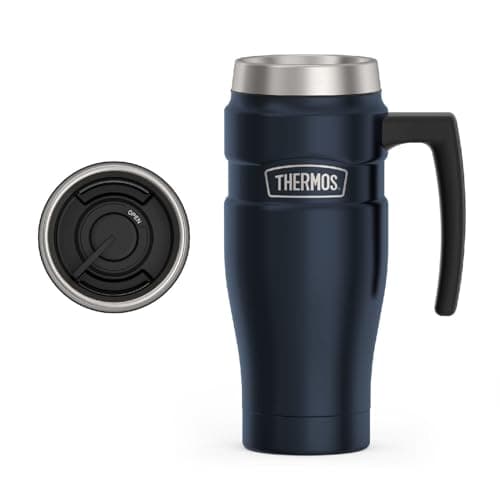
This is one of the few questions in drinkware with a clean physical answer rather than a marketing one. Thermos is explicit about it: its Stainless King travel mug is listed as 18/8 stainless, double-wall vacuum insulated, with a “sweat-proof exterior.” That is not a coating or a treatment — it is a description of what a working vacuum does.
So a dry outside is a feature of the category, and a wet outside is information. The useful part of this page is working out which kind of information.
Why a vacuum cup should not sweat
Condensation forms when a surface is colder than the dew point of the air touching it. A single-wall steel cup conducts the cold of the drink straight to its outside face, that face drops below the dew point, and water forms — which is why a single-wall cup leaves a ring on a table and a vacuum cup does not.
A vacuum tumbler has two steel walls with the air evacuated between them. With almost no air to carry heat by conduction or convection, the inner wall can be at 34°F while the outer wall sits within a degree or two of the room. No cold surface, no condensation. It is the same mechanism that keeps the drink cold, read from the outside — which is why the dry exterior is a usable proxy for whether the insulation is working at all.
One qualification for honesty: “should not sweat” is not “cannot”. In genuinely extreme humidity, with the cup full of ice for hours and a room at 90% relative humidity, a slight haze near the base is possible, because the base is where the two walls are joined and a little heat does cross there. A haze near the base is different from a cup running with water.
The three causes of a wet tumbler
1. It is not actually vacuum insulated. Plenty of steel cups are double-walled with an air gap and no vacuum, and plenty more are single-wall steel sold as “insulated” because they have a plastic sleeve. Those sweat by design. The published spec is the tell: every cup on this site that we rank states double-wall vacuum insulation, and a cup whose page says only “stainless steel” is telling you what it left out.
2. The vacuum has failed. This is the real one. A drop on a hard floor, a seam weld that was marginal, or years of thermal cycling can admit air into the cavity, and a vacuum cup that has taken air in is just a double-wall cup: it sweats, and it stops holding cold. The two symptoms always arrive together, which is the key diagnostic.
3. The water came from somewhere else. By far the most common. A splash-resistant lid — Stanley says the FlowState cover on the Quencher H2.0 resists splashes rather than sealing, and YETI says plainly that the MagSlider lid is “not leakproof and should not be stored inside a backpack” — will let a little liquid out when the cup tips or when ice shifts. Condensation also forms legitimately on the lid itself and around the rim, where the cold drink meets room air directly.
The two-minute test
Fill the empty, room-temperature cup with cold water and ice to within an inch of the rim. Wipe the whole outside dry. Leave the lid off, on a dry countertop, for ten minutes, and do not touch it.
Dry body, dry base, dry ring on the counter: the vacuum is intact. Any water you have been seeing is coming from the lid, the rim or a spill.
Wet body, or a wet ring on the counter: the outer wall is cold, which means heat is crossing the cavity. Confirm it by feel — pick the cup up and touch the side. A working vacuum cup full of ice feels like a cup at room temperature. A failed one feels cold, and that is unmistakable once you have felt both.
Wet only in a band near the base: normal in humid conditions, because the base is where the walls join. Not a fault.
Lids, rims and straws: normal condensation
Water on the lid is not a defect and no brand claims otherwise. The lid is a thin piece of plastic with a cold drink on one side and room air on the other, and it has no vacuum in it — so it is the one part of the cup that is genuinely cold on its outer face, and it will fog and bead.
A straw makes it more visible: the straw is cold along its whole exposed length, and the drip you find on a desk is usually straw condensation running down rather than anything out of the cup. A cup that lives in a bag should have a lid that is actually leakproof rather than splash-resistant — Stanley's ProTour flip straw and the IceFlow are the ones with that claim here, and Treeline Review reported the IceFlow sealed after being held upside down. The leak question has its own rankings in best tumblers with a straw and best 40 oz tumblers.
If the vacuum has failed, claim it
This is the part worth knowing, because lost insulation is one of the few drinkware failures that warranties name explicitly.
Stanley's lifetime warranty text covers “degradation of thermal performance” on the stainless vacuum body. Simple Modern's limited lifetime term says that “drinkware that has lost its insulating properties” is covered while dents and scratches are not. Klean Kanteen's Strong as Steel lifetime limited warranty covers manufacturing defects for as long as the original purchaser owns it, bought from Klean Kanteen or an authorized seller. YETI publishes 5 years on Rambler drinkware. Thermos publishes 5 years on stainless vacuumware.
So a sweating cup from any of those brands is a claim, not a replacement purchase — provided you washed it the way the maker said to, which is covered in are tumblers dishwasher safe. Every term we could read is quoted and dated in the tumbler warranty comparison, and the same diagnosis for coolers and cooler-sized vacuum failures is in why is my YETI not keeping ice.
Our picks for this
Three cups that state their construction
Each of these publishes double-wall vacuum insulation on its own page, and each carries a term that covers the failure this page is about. The Thermos is the only one that puts the words 'sweat-proof exterior' in writing.
Best travel mug with a handle
Thermos Stainless King Vacuum Insulated Travel Mug 16 oz
5-yr warranty7.2/10The only cup here whose listing says 'sweat-proof exterior' outright, alongside 18/8 steel, double-wall vacuum insulation, a sealing DrinkLock lid and a 5-year term on stainless vacuumware.
$27.99Amazon#ad · Price as of November 4, 2026 · Disclosure for the link to Thermos Stainless King Vacuum Insulated Travel Mug 16 oz
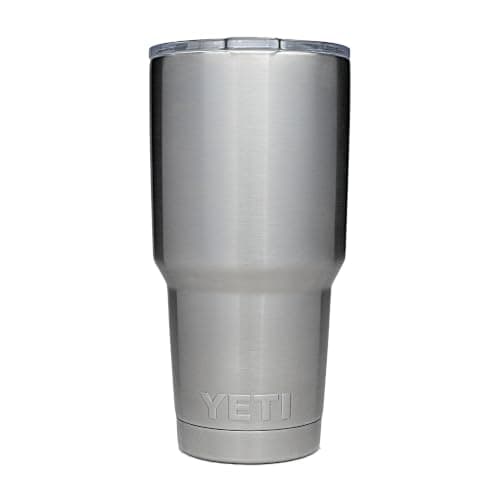
Best 30 oz for the long haul
YETI Rambler 30 oz Tumbler with MagSlider Lid
5-yr warranty7.6/10Kitchen-grade 18/8 with double-wall vacuum insulation and a 5-year term. Note YETI's own warning that the MagSlider lid is not leakproof - most 'sweating' Ramblers are leaking lids.
$40.00Amazon#ad · Price as of November 4, 2026 · Disclosure for the link to YETI Rambler 30 oz Tumbler with MagSlider Lid
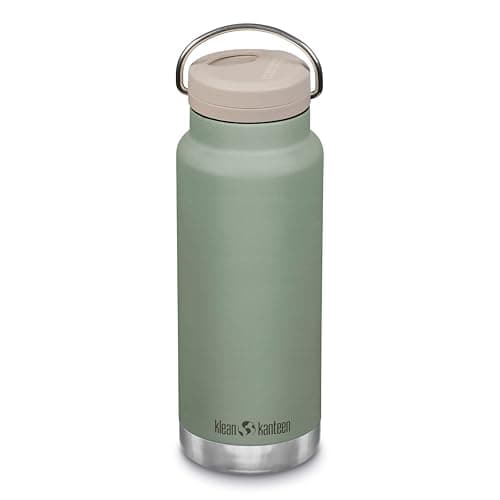
Best buy-it-for-life bottle
Klean Kanteen 32 oz TKWide with Twist Cap
Lifetime warranty9.1/10Climate Lock vacuum construction with a chip-resistant Klean Coat finish and a lifetime limited term for the original purchaser, plus a gasket kit sold as a spare.
$46.95Amazon#ad · Price as of November 4, 2026 · Disclosure for the link to Klean Kanteen 32 oz TKWide with Twist Cap
How we scored this
What we checked before picking
Every pick on this page is built from documents you can open yourself: the maker's published capacity, insulation, dimensions and weight; the warranty term quoted from the maker's own warranty page with the date we read it; the parts catalogue, to confirm the latches, gaskets, plugs, lids and straws can actually be bought; and the third-party ice-retention tests that measured these models (OutdoorGearLab, Outdoor Life, Treeline, Outside, Gear Patrol), credited to the publisher that ran them. Every figure links to where it came from, so you can check the pick before you buy it.
Scores are editorial judgments built from that documented research. Commissions never set a score or decide a pick. The rubric and its weights are published.
Questions
Frequently asked
Do insulated tumblers sweat?
A working vacuum-insulated tumbler should not. The vacuum keeps the outer wall near room temperature, and condensation only forms on a surface below the dew point. Thermos describes this directly as a “sweat-proof exterior”.
Why is my YETI tumbler sweating?
Either the MagSlider lid is letting liquid out — YETI states it is not leakproof and should not be stored in a backpack — or the vacuum has failed. Test it: if the drink is still cold at hour six, the insulation is fine and the lid is the problem.
Do Stanley tumblers sweat?
They should not through the body. Stanley describes the Quencher H2.0's FlowState cover as resisting splashes rather than sealing, so water around the base of a Quencher is usually from the lid. Condensation on the lid itself is normal on every brand.
How can I tell if my tumbler has lost its vacuum?
Fill it with ice water, dry the outside, leave it ten minutes untouched with the lid off. If the body is wet or the side feels cold to the touch, heat is crossing the cavity. The cup will also have stopped holding ice — the two symptoms always arrive together.
Is a sweating tumbler covered by warranty?
If the cause is a failed vacuum, usually yes. Stanley's lifetime term names degradation of thermal performance; Simple Modern's names drinkware that has lost its insulating properties; YETI publishes 5 years and Thermos 5 years on stainless vacuumware.
Does a sweating tumbler mean it is fake?
Not by itself, but it is a reason to look. A cup sold as insulated that sweats from the body is either single-walled, double-walled without a vacuum, or faulty, and none of those match what the major brands publish for their own products.
Keep reading
Related on Chill & Chest
Receipts
Sources
- Thermos — 16 oz Stainless King Vacuum Insulated Travel Mug product page (read 2026-09-26)
- Thermos — Warranty page, stainless vacuumware 5 years (read 2026-09-21)
- L.L.Bean (authorized YETI dealer) — YETI Rambler 30 oz Tumbler with MagSlider Lid (read 2026-09-21)
- YETI — Warranty Information (YETI's warranty page as republished by Acme Tools, an authorized YETI dealer; read 2026-09-21)
- Amazon — Klean Kanteen TKWide Insulated Bottle 32 oz listing, model 1010112: shipped with the "Twist Cap with a built-in reusable stainless steel straw", "keeps beverages iced for up to 59 hours with Climate Lock technology", 1.14 lb (read 2026-10-03)
- Klean Kanteen — Strong as Steel Lifetime Limited Warranty (read 2026-09-21)
- Stanley 1913 — Quencher H2.0 FlowState Tumbler 40 oz product page (read 2026-09-21)
- Stanley 1913 — Quencher ProTour Flip Straw Tumbler 40 oz product page (read 2026-09-21)
- Stanley 1913 — Product Warranty (read 2026-09-21)
- Simple Modern — Warranty page (read 2026-09-21)
- Treeline Review — "Best Insulated Tumblers of 2026", updated August 4, 2026, spec table (read 2026-09-21)
Specs come from the maker's own product pages (linked on every product), warranty terms from the maker's warranty page with the date we read it, and ice-retention measurements are attributed to whoever measured them. Prices are the live Amazon price with the date they were last checked. Where a figure isn't published anywhere, the page says so. Read the full method.