Hard Coolers / Guide
Bear-resistant coolers: what an IGBC certification actually certifies
A ranger at a trailhead does not care how thick your cooler is. They care whether it appears on one list, closed the way the list says, with the right hardware through the right holes. That list is the Interagency Grizzly Bear Committee's.
By Mike M.Updated Researched · every figure sourced
#adReader-supported: we may earn a commission if you buy through our links, at no extra cost to you. It never decides a ranking. How we rank · Disclosure
The short version
“Bear-resistant” is not an adjective on this subject; it is a certification with a list behind it. If you are camping where certified food storage is required — much of Yellowstone, Grand Teton, Glacier and large parts of the national forests around them — the only thing that satisfies the requirement is a container on the IGBC list, closed and secured the way its certification specifies. A thick rotomolded cooler with no certification does not qualify, however strong it is.
What IGBC certification is
That second list is the detail most buying guides skip. A certification is not permanent: manufacturers have to re-verify annually, and products whose makers have not done so are moved off the confirmed list. If you are buying a cooler specifically to satisfy a storage order, check the list rather than the box.
How a container is tested
IGBC states that products must “either ‘pass’ a live bear test using captive grizzly bears or a technical evaluation”. The live testing is done by the Grizzly & Wolf Discovery Center in West Yellowstone, Montana, and the Washington State University Bear Center in Pullman, Washington, with the Wildlife Management Institute providing financial and administrative support. The protocol itself, per IGBC, “was developed through a cooperative effort among IGBC, Montana Fish, Wildlife and Parks, the US Forest Service, the Living with Wildlife Foundation, and the Grizzly & Wolf Discovery Center”.
That is the whole of what the certifying body publishes about the method, and it is worth being precise about it: the “sixty minutes with a grizzly” figure you will see repeated across the internet is not stated on IGBC's program page. Lifetime does state it for its own cooler — its 55 Quart product page says the cooler is “Certified to Withstand a Bear For Up To an Hour” — and that is a manufacturer's claim about its own certified product rather than a description of the program.
What it does not mean
It also says nothing about ice. Certification is a structural test; it has no relationship to measured ice retention, warranty term or whether the brand sells a replacement latch. The Tundra Haul measured 5.4 days below 40°F at OutdoorGearLab and the Lifetime 55 has no third-party ice test on record at all — the ice chart is a separate question from this page.
How to verify a cooler before a trip
Four steps, in order:
1. Find the certification number on the product. Certified containers carry one. 2. Match it against the IGBC Bear Resistant Products List, which IGBC publishes as a PDF — matching by brand name alone is how people end up with the wrong model, because certification attaches to a specific model and often a specific closure method. 3. Check it is on the confirmed list and not the unconfirmed one. 4. Check the land manager's own order, because a few jurisdictions name acceptable container types directly rather than deferring to the list.
If the unit you own is not certified, the practical alternative is a certified hard-sided canister or a bear box provided at the site, with the cooler used for drinks in the vehicle. Storing food in an uncertified cooler where certified storage is required is a citable offence in most of those jurisdictions, and it is the reason the hunting page treats certification as a hard requirement rather than a feature.
The models that publish one
This site will not print a certification it cannot show you. Two coolers in the registry have one documented in a source we read and dated: the YETI Tundra Haul, recorded as IGBC bear certified and dry-ice compatible in OutdoorGearLab's spec table, and the Lifetime 55 Quart, whose own product page states the hour claim. Blue Coolers' 30 Quart Companion also carries a certification per the brand's own page, though it is not ranked here because Blue publishes no replacement parts for any of its coolers.
Plenty of other rotomolded coolers are certified in fact — the certified list runs to hundreds of products. The two below are simply the ones whose certification is in a document we can point you at.
Our picks for this
Certified, and documented
The two coolers on this site with a bear-resistant certification published in a source we read and dated.
Best wide wheeled cooler
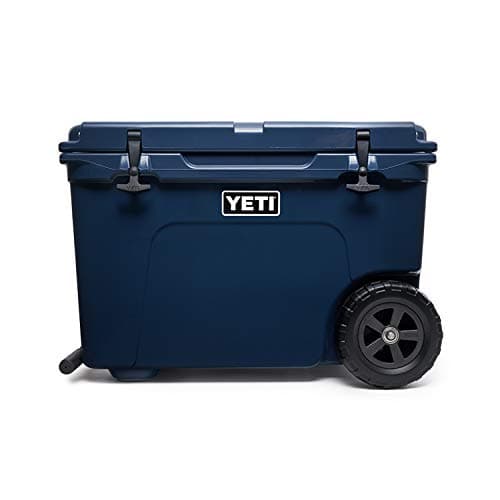
YETI Tundra Haul
5-yr warranty9.4/10IGBC bear certified and dry-ice compatible per OutdoorGearLab's spec table, 5.4 measured days below 40 degrees F, a 5-year term, and every latch, gasket and plug sold as a YETI part.
$450.00YETI Tundra Haul on Amazon#ad · Price as of November 9, 2026 · Disclosure for the link to YETI Tundra Haul
Best 5-year-warranty budget cooler
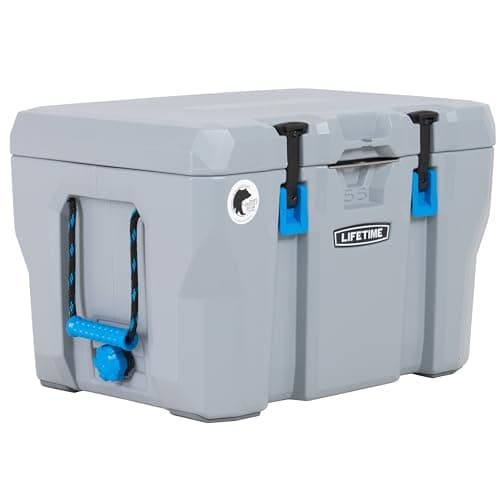
Lifetime 55 Quart High Performance Cooler
5-yr warranty9.1/10Lifetime's own page states the cooler is 'Certified to Withstand a Bear For Up To an Hour', on a 5-year term with a stainless steel hinge rod. No independent ice test of it exists.
$173.99Lifetime 55 Quart on Amazon#ad · Price as of November 9, 2026 · Disclosure for the link to Lifetime 55 Quart High Performance Cooler
| Evidence | YETI Tundra Haul | Lifetime 55 Quart High Performance Cooler |
|---|---|---|
| Capacity | 53.2 qt / 85 cans measured (OutdoorGearLab) | 55 quart · 'room for 60 cans with ice' |
| Ice retention (reported) | 5.4 days below 40°F, 6.0 days below 50°F (OutdoorGearLab, updated July 2026) | Unverified: no third-party test found as of 2026-09-21 |
| Construction | — | Heavy-duty polyethylene; stainless steel hinge rod; two rubber latches; 'Certified to Withstand a Bear For Up To an Hour' |
| Material | — | Urethane, polypropylene, polyester rope, polyethylene |
| Weight | 36.0 lb (measured) | — |
| Warranty | 5-year limited (YETI Tundra) | 5-year warranty (Lifetime product page) |
| Replaceable parts | — | — |
| Score | 9.4/10 | 9.1/10 |
Locks, and why a certified cooler can still fail
Almost every cooler certification is conditional on the closure. Certified coolers carry molded lock holes, and the certification applies when padlocks are fitted through them — typically two, one at each corner of the lid. A certified cooler left latched but unlocked is, for the purposes of a storage order and of an actual bear, an uncertified cooler.
Buy the padlocks with the cooler, carry a spare key somewhere other than inside the cooler, and remember that the lid gasket is still the part that wears: a certified cooler whose gasket has gone hard is a certified cooler that smells like food. Replacing a gasket takes minutes, and cleaning the smell out matters more in bear country than anywhere else.
How we scored this
What we checked before picking
Every pick on this page is built from documents you can open yourself: the maker's published capacity, insulation, dimensions and weight; the warranty term quoted from the maker's own warranty page with the date we read it; the parts catalogue, to confirm the latches, gaskets, plugs, lids and straws can actually be bought; and the third-party ice-retention tests that measured these models (OutdoorGearLab, Outdoor Life, Treeline, Outside, Gear Patrol), credited to the publisher that ran them. Every figure links to where it came from, so you can check the pick before you buy it.
Scores run from 8.4 to 10: 9.5–9.8 is category-defining, 9.0–9.4 outstanding, and 8.4–8.9 excellent and strongly recommended. Nothing below 8.4 is listed here — a product that cannot earn 8.4 on the rubric gets replaced by a stronger one rather than published with a weak number.
Scores are editorial judgments built from that documented research. Commissions never set a score or decide a pick. The rubric and its weights are published.
Corrections & updates
- First published. Every claim about the certification programme quoted from IGBC's Bear Resistant Products page, read 2026-11-10.
Questions
Frequently asked
What makes a cooler bear-resistant?
Appearing on the Interagency Grizzly Bear Committee's Bear Resistant Products List after passing either a live test with captive grizzlies or a technical evaluation. IGBC describes the standard as the “minimum standards for the amount of effort grizzly bears must expend to reach the contents”. Thickness and brand are not the test.
Which coolers are IGBC certified?
Nearly 500 products from more than 100 manufacturers are on the published list. On this site, the YETI Tundra Haul (recorded as IGBC certified in OutdoorGearLab's spec table) and the Lifetime 55 Quart (per Lifetime's own page) are the two whose certification we can cite. Always match the certification number on your unit to the current list.
Is a YETI cooler bear-proof?
No cooler is bear-proof — IGBC states certification “does not guarantee” a product will not be breached. The Tundra Haul is bear certified, which is a different and weaker claim, and only while it is padlocked through its lock holes.
Do I need padlocks for a bear-resistant cooler?
Yes. Cooler certifications are conditional on the closure method, which normally means padlocks fitted through the molded lock holes. Latched-but-unlocked does not satisfy a food storage order.
Does a bear-resistant cooler hold ice better?
There is no relationship. Certification is a structural test. The Tundra Haul measured 5.4 days below 40°F at OutdoorGearLab; the certified Lifetime 55 has no independent ice test on record.
Where do these numbers come from?
Every statement about the certification programme is quoted from the Interagency Grizzly Bear Committee's own Bear Resistant Products page, read 2026-11-10. Product certifications are quoted from OutdoorGearLab's spec table and the manufacturers' own pages, and ice figures are OutdoorGearLab's.
Keep reading
Related on Chill & Chest
- Best coolers for huntingWhere certification is a requirement, not a feature.
- Lifetime coolers reviewThe budget cooler with a bear claim.
- Rotomolded vs injection-moldedWhy only one format gets certified.
- Latch and gasket replacementThe gasket matters most in bear country.
- Best hard coolersThe full ranking.
Receipts
Sources
- Interagency Grizzly Bear Committee — Bear Resistant Products program page: certification means a commercially available container "met minimum standards for the amount of effort grizzly bears must expend to reach the contents", products must "either 'pass' a live bear test using captive grizzly bears or a technical evaluation", live testing is carried out by the Grizzly & Wolf Discovery Center (West Yellowstone, MT) and the Washington State University Bear Center (Pullman, WA) with the Wildlife Management Institute providing financial and administrative support, the protocol "was developed through a cooperative effort among IGBC, Montana Fish, Wildlife and Parks, the US Forest Service, the Living with Wildlife Foundation, and the Grizzly & Wolf Discovery Center", certification "does not guarantee" that a product is bear-proof, the published Bear Resistant Products List runs to nearly 500 products from more than 100 manufacturers, and a separate "unconfirmed products list" covers makers that have not completed annual verification (read 2026-11-10)
- OutdoorGearLab — YETI Tundra Haul review, updated July 17, 2026 (read 2026-09-21)
- OutdoorGearLab — "The Best Coolers of 2026", updated July 17, 2026, comparison table (read 2026-09-21)
- YETI — Warranty Information (YETI's warranty page as republished by Acme Tools, an authorized YETI dealer; read 2026-09-21)
- Lifetime — 55 Quart High Performance Cooler product page (read 2026-09-21)
- Blue Coolers — 30 Quart Companion Series Roto-Molded Cooler listing: "True 30 Quart Interior Volume", "24-26 cans", "21.2 lbs" empty, IGBC bear-resistant certification and the same 5-year term; out of stock on 2026-10-09 (read 2026-10-09)
Specs come from the maker's own product pages (linked on every product), warranty terms from the maker's warranty page with the date we read it, and ice-retention measurements are attributed to whoever measured them. Prices are the live Amazon price with the date they were last checked. Where a figure isn't published anywhere, the page says so. Read the full method.